Spring Is Already Here — Even If the Calendar Disagrees
In North Texas, weeds don’t read calendars. They respond to temperature.
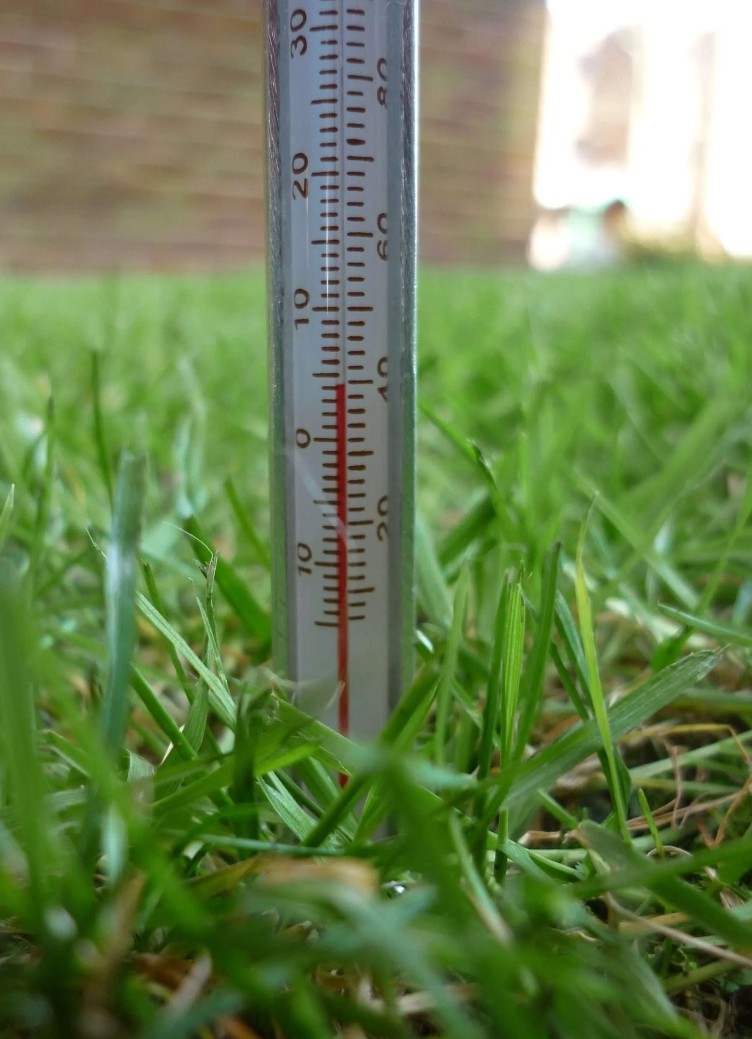
As of February 16th, soil temperatures across the region have been above 55°F for 16 days, peaking at 65°F. That’s nearly 10 degrees warmer than anything recorded during this same period over the past decade. From a turfgrass and weed biology standpoint, that isn’t a minor fluctuation — it’s a signal.
When soil temperatures cross the 55°F threshold, spring weed germination begins. At 60–65°F, that process accelerates. Seeds that have been dormant through winter moisture cycles begin to crack open. Root structures initiate. Early growth establishes quietly below the surface.
By the time many homeowners see weeds in March, the process started weeks earlier.
What an Early Spring Weed Transition Actually Looks Like
An early season transition doesn’t announce itself dramatically. It starts subtly:
Warmer soil profiles earlier in the year
Extended windows of germination conditions
Moisture availability from winter precipitation
Reduced dormancy duration for turfgrass
This combination creates a compressed timeline where winter weeds are finishing strong while spring weeds are already emerging. The overlap increases weed density and competition pressure before most lawn programs are fully engaged.
If your lawn care company is operating on fixed calendar dates rather than soil metrics, they are already behind.
The Bandwidth Problem in the Lawn Care Industry
Here’s the uncomfortable truth: many lawn care companies do not have the bandwidth to react to climate-driven shifts.
Large-route operations schedule treatments weeks in advance. Their product inventories are purchased seasonally. Their labor scheduling is fixed. Their treatment cycles are built around predictable calendar assumptions.
When soil temperatures rise 10 degrees above historical averages, they don’t pivot — because they can’t.
Instead, applications proceed “on schedule.”
But weeds don’t care about schedule.
When pre-emergent timing lags behind germination thresholds, the barrier is applied after seeds have already initiated growth. At that point, prevention becomes reaction. Reaction is always more expensive and less effective.
What Happens When Technical Metrics Are Ignored
Ignoring soil temperature data during an early transition year leads to predictable outcomes:
Breakthrough weed pressure in March
Increased reliance on post-emergent herbicides
Thinner turf entering summer stress
Higher treatment frequency to regain control
The data up to this point strongly suggests a weedier-than-normal spring across North Texas. Extended soil warmth combined with consistent moisture sets the stage for elevated germination rates.
Pretending this is a “normal” February is not a strategy. It’s inertia.
How American Lawnscape Responds Differently
At American Lawnscape, we track soil temperature trends continuously. When the data shifts, our program shifts with it.
If soil conditions indicate accelerated germination, we adjust our treatment regimen mid-cycle. We select the products most effective under warmer conditions, regardless of what the calendar says.
That means:
Adjusting active ingredients when necessary
Altering application timing windows
Modifying rates and intervals based on environmental data
Taking advantage of warm periods rather than being surprised by them
This isn’t reaction — it’s adaptation.
A warmer early season allows us to deploy specific products that perform optimally at elevated soil temperatures. When used strategically, climate shifts can be leveraged rather than feared.
Climate Patterns Are Changing — Programs Must Change With Them
The last decade of North Texas weather data shows increasing variability. Warmer winter windows. Compressed transitions. Earlier spring triggers.
Programs built for “average years” are increasingly misaligned with actual conditions.
Weeds respond to soil temperature, moisture, and light — not dates on a service calendar. When those metrics shift, treatment strategy must shift as well.
We began adjusting our 2026 program before the new year because the data warranted it. Waiting until visible weeds appear is not prevention. It’s damage control.
Strategy Over Schedule
A strong lawn care program is not defined by how consistently it follows a calendar. It’s defined by how precisely it responds to conditions.
When soil temperatures rise earlier than expected, protection must rise with them. When germination windows expand, treatment windows must adjust.
At American Lawnscape, we build programs around measurable environmental data — not habit.
Because weeds don’t have a calendar.
They have thresholds.
And this year, those thresholds were crossed early.
Effective lawn strategies work with current conditions, not against them.
Stewardship is a partnership, not a fight.
For a Lawn Treatment Plan that is designed around the needs of your lawn, reach out to us at American Lawnscape today! Call or Text 214-308-1322 or visit us at www.Turfveteran.com.


